
In modern Markham—home to over a thousand high-tech enterprises, financial firms, and busy corporate offices—more than 70% of working adults experience recurring musculoskeletal discomfort. The two most widespread complaints that present at our clinic doors are radiating gluteal and leg pain (commonly referred to as sciatica) and severe upper trap/cervical rigidity ("Tech Neck").
When surface-level spa massages provide relief for only an afternoon, patients often wonder: Why does the pain keep returning? In this clinical guide, the registered therapists at Buttonville RMT Wellness Clinic (2939 16th Ave, Markham) explore the biomechanics of persistent postural pain and explain how targeted Deep Sport Tissue Massage, combined with IASTM fascia scraping and cupping therapy, delivers lasting neuromuscular decompression.
Passive desk sitting freezes the hip flexors and overstretches the glutes, while forward head tilt quadruples gravitational load on your cervical spine. Healing requires breaking down deep myofascial cross-links and restoring muscular sliding mechanics—not just rubbing superficial skin layers.
1. The Tech Worker Syndrome: Anatomy of "Tech Neck"
The average human head weighs approximately 10 to 12 pounds in neutral alignment. However, when you lean forward by just 45 degrees over a laptop or smartphone—a standard posture for Markham software engineers and remote workers—the cervical spine experiences a simulated load equivalent to nearly 50 pounds!
Over months of sustained strain, the deep suboccipital muscles, levator scapulae, and upper trapezius enter a state of chronic ischemic spasm (lack of adequate blood circulation). Muscle fibers shorten, collagen cross-linking develops, and rigid neuromuscular "trigger points" form. This manifests as:
- Dull, throbbing tension headaches radiating behind the eyes and temples (Cervicogenic Headaches).
- Restricted cervical rotation (difficulty turning your head when checking blind spots while driving on Hwy 404 or 407).
- Burning sensations between the shoulder blades (Rhomboid and Middle Trapezius ischemic strain).
2. Understanding Sciatica vs. Piriformis Syndrome
The sciatic nerve is the largest single nerve trunk in the human body, running from your lumbar spine through the pelvis and deep into the lower leg. When clients visit our 16th Avenue clinic reporting a sharp, electric shooting ache down the buttock into the hamstring, they frequently worry they have a severe spinal disc herniation.
While spinal disc pathology must always be clinically assessed, in a huge percentage of desk workers, the condition is actually Piriformis Syndrome (often called "pseudo-sciatica"):
- Prolonged Sitting: Sitting 8+ hours a day exerts direct compressive ischemia on the piriformis and external hip rotator muscles.
- Nerve Entrapment: The sciatic nerve passes directly beneath—or in approximately 15% of individuals, pierced directly through—the belly of the piriformis muscle.
- Spasm & Compression: When the piriformis spasms from chronic disuse and pelvic tilting, it physically pinches the sciatic nerve, mimicking identical symptoms of a lumbar herniation.
3. How Deep Tissue Massage Solves Deep Muscle Entrapment
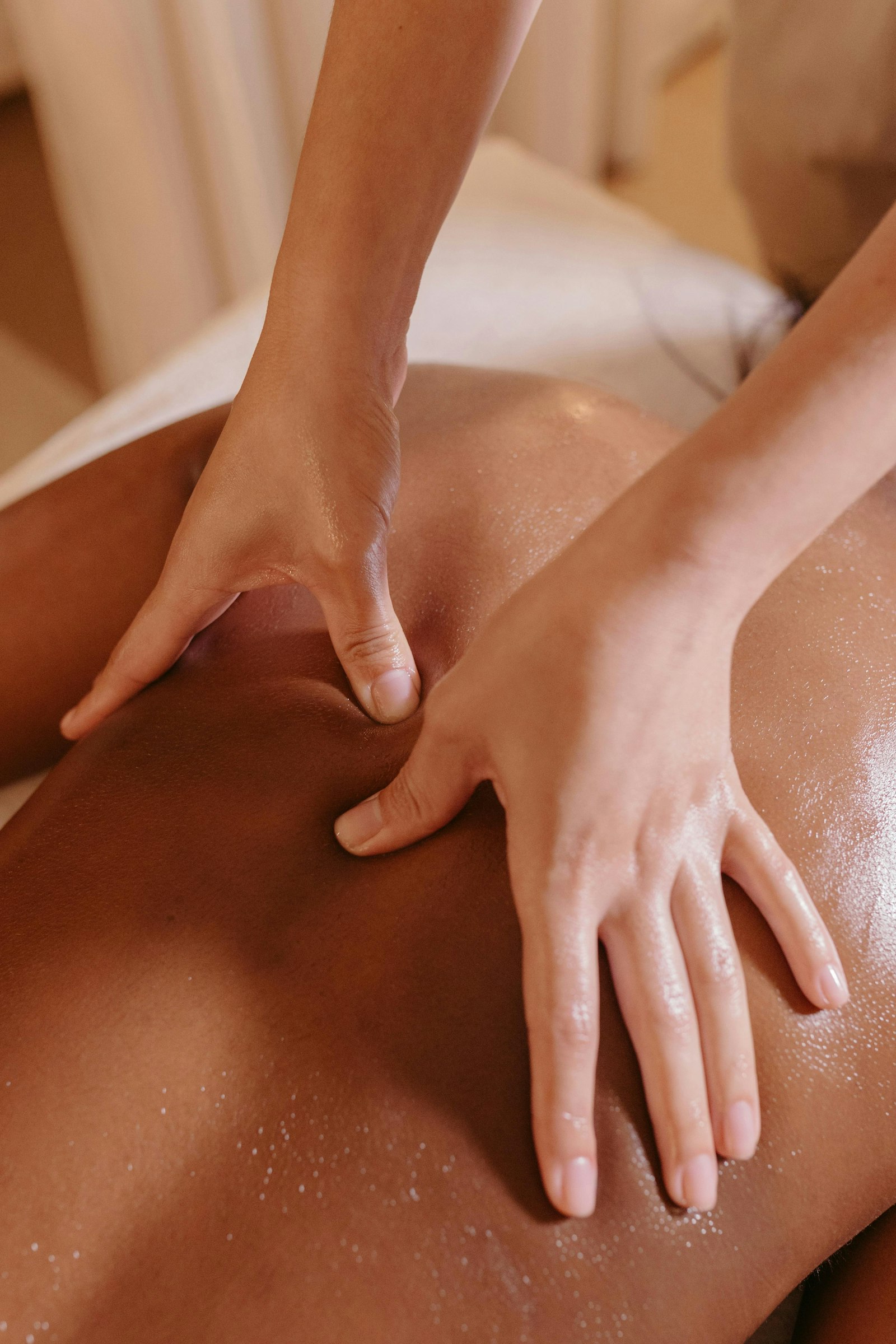
Unlike a relaxing Swedish massage that focuses on broad surface effleurage, clinical Deep Tissue Massage employs sustained ischemic pressure, cross-fiber friction, and active muscle stripping targeting deep musculature:
| Physiological Mechanism | Swedish Relaxation Massage | Clinical Deep Tissue Therapy |
|---|---|---|
| Target Layers | Superficial skin, subcutaneous fascia, and upper muscle sheets | Deep investing fascia, sub-gluteal rotators, quadratus lumborum (QL), suboccipitals |
| Pressure Style | Gentle to moderate rhythmic flowing strokes | Slow, focused, penetrating ischemic compression and deep friction |
| Fascial Impact | Temporary relaxation of tone | Structural remodeling of rigid myofascial adhesions and scar tissue |
| Nerve Decompression | Minimal direct impact on nerve tunnels | Directly releases entrapping contractures around the sciatic and occipital nerves |
4. The Power Trio: Deep Tissue + IASTM + Cupping Therapy
At Buttonville RMT Wellness Clinic, we believe the most resilient clinical results are achieved by pairing manual deep tissue therapy with targeted physical modalities:
1. IASTM (Instrument Assisted Soft Tissue Mobilization)
Using precision contoured medical-grade stainless steel tools, our therapists perform IASTM soft tissue scraping. The beveled steel edge magnifies tactile feedback, allowing us to pinpoint microscopic fascial cross-links and fibrotic scar tissue in the cervical spine and plantar fascia that cannot be detected by bare thumbs. This initiates localized microvascular neovascularization, stimulating fresh collagen synthesis and rapid tissue remodeling.
2. Decompression Cupping Therapy
Traditional manual massage is compressive—it pushes down on tissue layers. Cupping therapy does the exact inverse: it introduces negative vacuum pressure. By gently lifting the skin, superficial fascia, and muscle septa away from underlying bone, cupping separates stuck fascial layers, drains accumulated metabolic lactic waste, and floods oxygenated blood into previously ischemic pain zones.
5. Clinical Treatment Journey: What to Expect at Buttonville RMT
- Targeted Orthopedic Intake: Your RMT reviews your medical history, posture, Range of Motion (ROM), and palpates for active trigger points.
- Thermal Preparation: Warm towels or focused hydrotherapy soften collagen fibers before deep pressure is applied.
- Neuromuscular Trigger Point Release: Targeted, controlled thumb, elbow, or forearm pressure on the piriformis, gluteus medius, and cervical extensors.
- Fascial Mobilization: Targeted IASTM scraping along restricted tension lines paired with static or gliding cupping.
- Remedial Exercise Prescription: Your therapist demonstrates 2 to 3 targeted stretches (such as the Figure-4 Piriformis Stretch and Chin Tucks) to prolong your pain-free results at home.
Frequently Asked Questions (FAQ)
How many deep tissue sessions will I need to relieve my sciatica or neck pain?
Most patients experience noticeable decompression and increased mobility within 1 to 2 sessions. For chronic postural conditions that have persisted for years, a structured treatment plan of 4 to 6 sessions spaced 1–2 weeks apart, followed by monthly maintenance, yields the most sustained long-term results.
Will cupping leave marks on my body?
Cupping may leave circular reddish or purplish discolourations called petechiae. These are not bruises (there is no blunt trauma to capillaries). They represent cellular debris and stagnant fluid brought to the surface. These marks are completely painless and naturally fade within 3 to 7 days.
Can I claim Deep Tissue and IASTM treatments on my health insurance?
Yes! When provided by a licensed Registered Massage Therapist at our Markham clinic, the entire session is billed under Registered Massage Therapy (RMT). We provide direct billing to Sun Life, Manulife, Canada Life, Green Shield, and all major Canadian insurers.